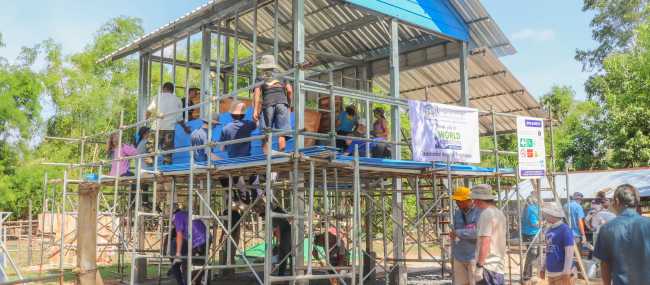
Students housebuilding in Cambodia
Blog home / The Transformational Impact of Service Learning
The Transformational Impact of Service Learning
In an increasingly interconnected world, secondary school students are no longer just learning about history, geography, or science from textbooks. They are experiencing it firsthand. Service Learning, which combines volunteer work with travel, provides students with a deeply transformative way to engage with global issues while contributing meaningfully to communities in need.
But how can schools ensure that this type of experience is impactful for both students and the host community? This article explores the value of Service Learning programs, the lessons they offer, and what teachers should consider when planning their school’s next overseas adventure.
The Value of Service Learning
The concept of combining travel with service is not new. Professionals have long shared their expertise in developing countries, while many young adults dedicate their gap years to volunteer projects. Today, more secondary schools are embedding Service Learning into their programs, recognising its potential to shape students’ personal and academic growth.
For high school students, Service Learning offers far more than the chance to help others. It provides immersive experiences that build global awareness, empathy, resilience, and confidence. While classroom lessons remain essential, these hands-on experiences cultivate life skills that cannot be taught from a textbook.
When students return from Service Learning trips, teachers often notice life-changing outcomes such as:
- Cultural tolerance and empathy through real connections with people in different contexts.
- Global awareness by seeing first-hand the geography, history, and challenges of communities.
- Independence and self-confidence from adapting to unfamiliar environments.
- Environmental responsibility when projects highlight the importance of sustainability.
Perhaps most importantly, students work side by side with host communities, creating bonds that go beyond traditional volunteerism.
A Case Study: Life on a Service Program in Nepal
Imagine being a high school student, far from home, immersed in the breathtaking landscapes of Nepal. In the remote village of Bichook, students contributed to projects such as constructing a fence for a safer play area and preparing land for a new classroom.
Beyond the physical work, students joined in the daily lives of the Gurung people — learning farming techniques, playing local games, and sharing meals. These cultural exchanges proved just as valuable as the projects themselves, offering students a deeper appreciation of the community.
The sense of accomplishment was profound. As one student put it, “It feels really good. It gives you a sense of achievement when you leave.” Another reflected on the contrast with life at home: “You look up at the snow-capped mountains and realize how much we have back home. To be able to give something back feels really special.”
What to Consider When Planning a Service Learning Trip
While the rewards are clear, thoughtful planning ensures Service Learning is genuinely beneficial for both students and host communities. Teachers often focus on:
- Choosing the right organisation: One that partners closely with local communities and understands school requirements.
- Selecting meaningful projects: Work that addresses real community needs and has long-term impact.
- Encouraging cultural sensitivity: Preparing students to engage respectfully with different customs.
- Ensuring sustainability: Projects that continue to benefit the community after students leave.
- Building in reflection: Activities that help students process experiences and link them back to curriculum goals.
Lasting Transformation
Service Learning is more than an educational tool. It is a catalyst for change that shapes students’ perspectives, instills empathy, and fosters a commitment to global citizenship. Whether helping to build a classroom in Nepal or contributing to conservation in Africa, these programs give students experiences that stay with them for life.
As one student said: “It’s just something different. None of my friends will be doing this in the holidays, and it’s something I’ll never forget.”